If one is not an Afrimist, they are limited, as even if data screams at the them at the highest of decibels, with strong positive signals, they fail to hear the positive message. Even if this data comes through one of the other four human senses, they become blind, oblivious, deaf, and are devoid of the ability to taste the uplifting nuggets of good news.
It is for the very same reasons that business leadership in most companies, have failed over the recent past, to harness the high returns associated with the perceived risks of doing business in Africa. Many business, risk and financial analysts, have been suffering from 'herd mentality' when it comes to how they judge Africa, only to be pipped at the post, by off shore researchers, who have recently rated Africa, as one, on the high rise in most aspects that a risk-averse institutional & nation-states investor would be looking at.
The foresight (displayed by Pan-African leaders) that led to the revamp of the OAU (Organisation of African Unity) into the AU (African Union), as well as the formation of its project (NEPAD), as well as its business arm, the NEPAD Business Group, is paying off. The African Peer Review Mechanism is bringing a shift away from rulership to leadership, where leaders in Africa are behaving in ways that indicate their acceptance of sharp eyes of their constituencies.
The very same Mo Ibrahim Foundation, is a product of new African pride, supported by many, who want to leave a better legacy, and bequeth an Africa that the 7th generation will be proud of...
I repeat, I am an Afrimist too!


Africa is not depressing
On October 4 2010, the headline on the BBC's website announcing the
results of the Mo Ibrahim Index of African Governance read: Africa
democratic rights advances reversed, says report.
The article went on with an overall focus on the reversal of
democratic advances outlined in the report. According to the BBC
article, the index suggests that across Africa, economic and health
gains are being undermined by declines in political rights, security and
the rule of law.
The emphatic conclusion of the BBC article was that the results of
the Mo Ibrahim Index of African Governance 2010 report were
'depressing.' According to the BBC article, the report points to the
fact that 35 of 53 states have become less secure, while two-thirds of
African countries show a declining performance in terms of human
rights.
The BBC article, in my opinion, was a typical distortion and
sensationalising of news out of Africa. After reading it, I couldn't
help but wonder whether the author of the article read the same report I
read. While it is true that there have been some reversal of
democratic advances on the continent, as the index suggests, the report
provided more good news than bad.
In addition to an unchanged average score in the report, Africa
advanced in more areas that the index assessed than it regressed. In
overall scoring, Africa advanced in two index group indicators while
regressing in two others, a tie at worse. More importantly, the advances
were made in the areas that matter most to Africans-our health, food
in our bellies and overall development. African citizens are becoming
healthier, have greater access to economic opportunities and are better
off from a human development standpoint than they were five years ago.
That this economic growth and improvement in the life of the average
African were achieved while Africa was receiving less help from the West
and in a period of great economic upheaval in the world gives me hope
that Africa's progress continues to gather steam, and is unstoppable.
The Mo Ibrahim Index of African Governance ranks 53 African countries
according to 88 indicators, ranging from corruption to education. The
index, which has been published since 2007, scores countries on a
scale of zero to 100, sponsored by Sudanese telecoms mogul Mo Ibrahim.
The official press release on the report made the following observation:
- In both Sustainable Economic Opportunity and Human Development there
have been improvements in many African countries. Importantly, no
country has declined significantly in these categories.
- In Sustainable Economic Opportunity, 41 African states improved; ten of these were significant.
- In Human Development, 44 of Africa's 53 countries progressed driven
by improvements in most countries in the Health and Welfare
sub-category. Two of the improvements in Human Development were
significant.
The indisputable fact is: Africa is developing. The development may
be slow but it is sure. This development is not just economic. It can
be found in just about any aspect of human development-politics,
education, health, governance and other human development indicators.
While the road is not smooth and Africa incessantly experiences
setbacks, the progress is incontrovertible. The progress is seen in the
resolve of Africans to improve their lot and of African policy makers
to address the needs of Africans. It is evident in the efforts being
made to integrate the economies of the various regions of the
continent. It is demonstrated in the world's improved perception of the
continent as a great place to do business, courtesy of African
countries like South Africa, Egypt, Libya and Nigeria, as well as the
BRIC countries, the World Cup press and the myriads of reports and
publications incessantly touting the African economic renaissance.
Like it or not, Africa is on an irreversible path of economic
transformation and development that will overshadow any regression made
in the political and personal safety areas.
Read more at www.sagoodnews.co.za
By Edward B. Mendy
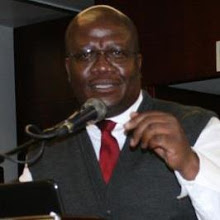
Edward B. Mendy is an African
lawyer educated and practising in the United States. Mendy is an avowed
Africa-optimist (Afrimist), who will be blogging for Africa - The Good
News.


No comments:
Post a Comment