Thursday, January 27, 2011

States in the US take the LEAD

Due to lack of unified commitment at nation-state level, to reduce anthropogenic impact on climate change, some of the states have, both individually and collectively, taken it upon themselves to do something.


My challenge is, with our three-tier system of governance, will we ever see leadership character coming out of either provincial, or local, on these matters?


Is it just a case of just waiting for the Province to do something, before a Metro can make significant leadership commitments to create climate prosperity out of climate change?


Is it also waiting for National to do something, from a Provincial leadership point of view?


I suspect the answer is in the affirmative to both questions, and until we have leadership that owns the space they lead, we are unlikely to come up with any earth-shattering improvements to stem the tide of emissions, or reducing our energy consumption, and let alone, switching over to less dependence on fossil fuels.


We are a federal state behaving otherwise, for the other tiers are there just by name, operating on reactive leadership behaviour.

Amplify’d from blog.algore.com
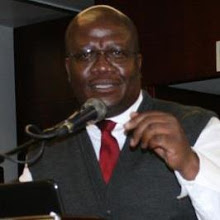
Former Vice President Al Gore in his home office in Nashville, TN. (Time magazine)

Former Vice President Al Gore in his home office in Nashville, TN. (Time magazine)


States Take the Lead January 27, 2011 : 5:15 PM


With Senate's failure to act to solve the climate crisis, states have now taken the lead:


“States are acting individually and collectively:”


“Massachusetts announced last month that it will cut greenhouse gas emissions 25%, from 1990 levels, by 2020. "It's very doable," says Richard Sullivan, the state's secretary of energy and environmental affairs. "When you focus on energy efficiency, you can go a long way."


“This year, the state will help fund ultra-efficient retrofits for some homes and give them a miles-per-gallon type efficiency label. It's working to allow auto insurers to base their rates partly on a car's annual mileage.”


“Three regional groups, representing at least 22 U.S. states, agreed last year to work together on "cap and trade" programs. These programs cap total emissions but allow businesses that pollute a lot to buy emissions credits from those that pollute less.”


“The regional groups include the Midwestern Greenhouse Gas Reduction Accord, signed by 10 governors, and the Western Climate Initiative, in which California, New Mexico, British Columbia, Ontario and Quebec are slated next January to begin their own "cap and trade" program.”


This work is both necessary and a huge step forward. But until we act together, both as a nation and as a planet, we will never get the climate crisis under control.




Read more at blog.algore.com
 

"Where you start in the marketplace is not where you have to stay." -- Jim Rohn http://amplify.com/u/anr5b
"Some people serve with pride -- because they ‘want to’ do and be their best; other people serve with disdain because they ‘have to’ do their job. Which person do you think will end up running the show?" -- Jeffrey Gitomer http://amplify.com/u/anr2q

Wednesday, January 26, 2011

"The market only pays excellent rewards for excellent performance, excellent products or excellent service." -- Brian Tracy http://amplify.com/u/anqd6
"Don't bring your need to the marketplace, bring your skill. If you don't feel well, tell your doctor, but not the marketplace. If you need money, go to the bank, but not the marketplace." -- Jim Rohn http://amplify.com/u/anphl

Wednesday, January 19, 2011

The Advantages to Being an Outsider

In my own leadership journey (transformational), I have enjoyed the advantages, eveytime, I shifted from one industry/sector, to another...

Amplify’d from www.bnet.com

The Advantages to Being an Outsider

When Michael Bloomberg appointed Cathleen Black to be the next Chancellor of the New York school system, it wasn’t because she was an expert in public education. (Her own children went to private schools.) It was because of her reputation as an outstanding manager.

But it made me wonder: Is there an advantage to entering an industry where you have no proven track record or expertise?  Thinking about it, I could see there are three main pluses:

1. No Political Debts to Pay

Being an outsider clearly confers advantages. You have no affiliations. You aren’t beholden to particular people, causes, factions. All organizations, commercial or otherwise, have politics and it is critical for leaders to stay above them. So coming in without political debts is liberating.

2. Easier to Be Objective

The upside of ignorance is objectivity. You can be sure that Black will be lobbied, from day one, from everyone inside and outside the school system. For a short period, she’ll be able to take a clear-eyed view of everything she’s told and weigh the merits of a million arguments. Black has an outstanding track record for being able to cut through complex problems so she’ll be good at this. And after working inside media businesses, which are so riven with politics that make the Borgias look like the Waltons, her political instincts will be pretty sharp.

3.  A Fresh Perspective on Old Problems

As an outsider, she carries with her a different perspective on how the school system appears to the world outside education and outside politics. She knows its image, how stupid, incestuous and narcissistic internal wrangling looks to taxpayers. That gives her a connection with the public that is a mandate. And being media savvy, she will also appreciate that this image won’t be fixed by PR alone.

Read more at www.bnet.com